
Restaurant and hospitality acoustics
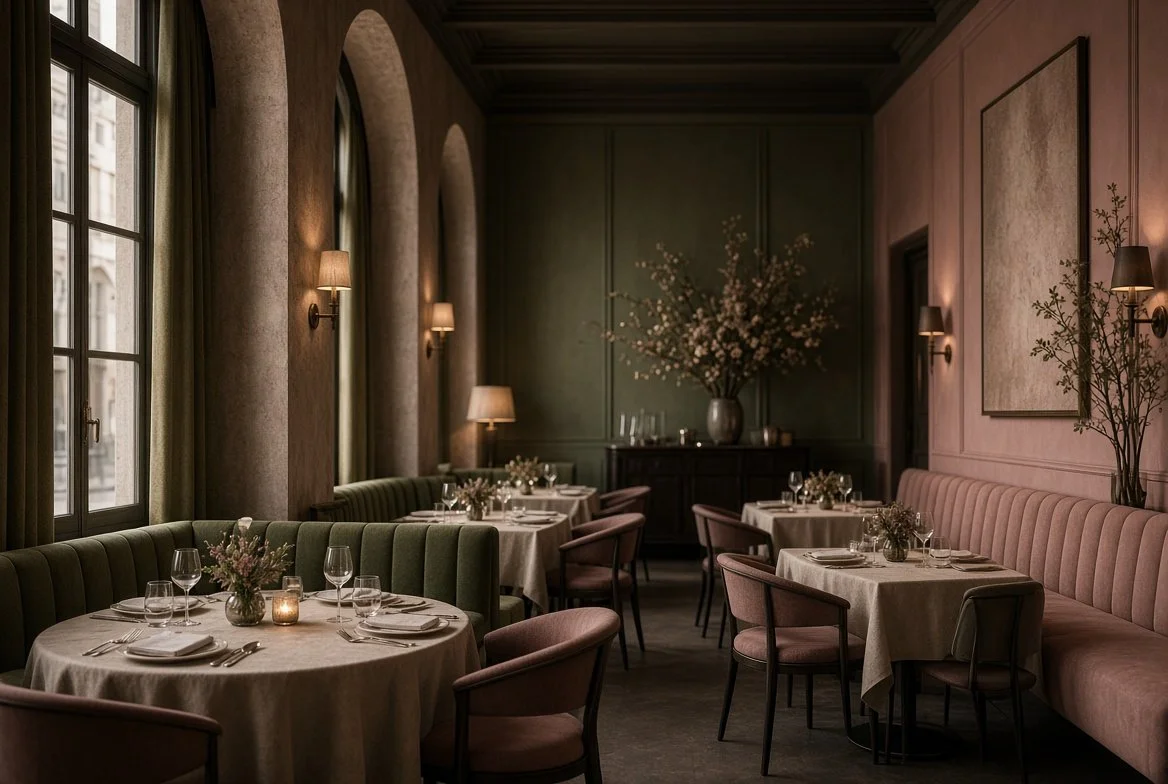
Sound is part of the hospitality experience. The buzz of a full dining room, the hush of a hotel corridor, music that sets the mood without drowning conversation: each is designed, whether or not anyone intended it. We help hospitality designers create rooms that feel lively and comfortable at the same time, with treatment that disappears into the interior.
Common hospitality acoustic issues
Rooms that get loud as they fill. Hard, reflective interiors can sound fine when empty and become uncomfortable at a full sitting, as each table raises its voice to be heard over the next.
Conversation across the table. When guests have to lean in or repeat themselves, the room feels tiring, however good the food and the design.
Kitchen, bar and extract noise. Noise from open kitchens, bars and extract plant can reach dining areas, hotel rooms or neighbours.
Music and sound systems. Levels, zoning and control decide whether music adds atmosphere or competes with it, and they can affect a venue's licence.
Hotel sound insulation. Guests expect quiet bedrooms, separated from each other, from public areas and from plant.
Our approach
We join as early as possible, when we can still review the materials, ceiling and volume of each space. At that stage acoustic performance can be built into the soffit, the upholstery and the joinery, rather than added as panels after opening.
Concealed or expressed absorption. Treatment hidden behind slatted ceilings, banquettes and joinery, or celebrated as a feature through bespoke acoustic elements.
Busy-service modelling. Acoustic modelling of the room at full occupancy, so you can see how it will sound on a Saturday night, not just at a quiet lunch.
Integrated sound systems. Sound system design with zoning, so the bar, the dining room and the terrace each have the right level, and loudspeakers sit quietly within the interior.
Noise break-out and licensing. Assessment of noise to neighbours from music, guests and plant, with planning and expert advice for licensing applications and environmental noise assessment for planning.
Measurement. Measurement and testing before opening, and afterwards if complaints arise, so that any fix is targeted.
Where a contractor proposes alternative finishes, our product acoustic verification checks that the substitute performs as specified.
Standards and regulation
Approved Document E: sound insulation for hotel bedrooms, as rooms for residential purposes, in England and Wales
BS 4142: assessment of plant and extract noise at neighbouring homes
Licensing: noise management to support the prevention of public nuisance objective under the Licensing Act 2003
Projects we have advised on
Auris provided acoustic design advice and consultancy on each of these hospitality projects.
Birch, Dubai: DA bureau's restaurant, with an open kitchen beneath a rippling oak ceiling
The Alchemist Café, Hong Kong International Airport: Minus Workshop's café
Le Méridien Ra, Calafell: Transit Studio's Bar Tempus and La Terrassa del Mar
Banyan Tree Mount Emei, Sichuan: CCD/Cheng Chung Design's low-density courtyard resort
Tivoli Cinema, Cheltenham: Fare Inc.'s bar and lounges
Frequently asked questions
Can a restaurant be made quieter without losing atmosphere? Yes. The aim is not silence but control. Reducing reverberation lets the room feel lively while guests can still talk at a normal level. Absorption can be hidden in ceilings, upholstery and joinery so the interior looks unchanged.
Can you help with a restaurant that is already open? Yes. We measure the room in use, identify where the noise builds up and recommend targeted changes that respect the existing design.
Do you design the sound system as well as the acoustics? We can. Designing the room acoustics and the sound system together means loudspeakers, finishes and noise limits are planned as one, which makes it easier to keep music even across the room and under control at the boundary.
Related services
Get in touch
Designing a restaurant, bar or hotel? Tell us about the space and the stage you are at. Get in touch, call 020 3949 1597 or email hello@auris-consultancy.com.